
Play Now
Join a Game
Characters
Shop
Tools
Compendium
Community

Sign In

Play Now
Join a Game
Characters
Shop
Tools
Compendium
Community
Sign In
The Western Frontier is a contested region caught between Breland, Droaam, and the Eldeen Reaches. Travelers and merchants from all three of these nations mingle on the Border Road and interact in villages and towns. Here are a few details about how the experience of everyday life differs from that of the Five Nations.
 While Breland may not recognize Droaam, the people who live on the Western Frontier largely recognize the Border Road as the line between Droaam and Breland. Denizens of Droaam use the term aravaat—the Goblin word for “Easterner”—to refer to people from the Five Nations, or anywhere east of the Graywall Mountains. A lot of Brelish settlers still use the term “monster” as a general term for Droaamites, but they also use west in place of Droaam; “Tell Captain Devra we’ve got some friends from the west.”
Common and Goblin are the two primary languages spoken on the Western Frontier. The Dhakaani Empire established Goblin in the region, and it has long been the lingua franca of the different cultures of the Barrens. The Brelish brought Common from the east, and the Daughters of Sora Kell encourage Droaamites to learn it; they’ve worked with House Tharashk to establish schools in the major Droaamite cities that teach Common, as well as fostering literacy in both Common and Goblin. So knowing one of these two languages goes a long way on the frontier, and most denizens of Droaam should have Goblin in their stat block in place of Giant or Orc. However, there are a number of other languages that can be heard on the frontier. Anyone with the ability to cast a Druid spell can learn Druidic, and travelers from the Eldeen Reaches may speak in this language; Greensingers often know Sylvan as well. The Orc language has largely been lost, as shown by the fact that the major orc cultures—the Gaa’aram and Gaa’ran—are named in Goblin; however, there could be isolated communities where it is still spoken. The mages of the Venomous Demesne learn Infernal as a trade skill, and may curse in this tongue or use it to speak privately.
These languages are drawn from the standard rules of D&D. However, there are a few more languages that could exist on the Western Frontier if the DM wishes to add complexity. The issue is that these optional languages are extremely narrow and will be almost useless in most situations. Because of this, if the DM decides to use these four languages, they may wish to give them to appropriate characters as a free benefit in addition to any other languages they may know. These languages are:
High Kaluu, spoken only in the Venomous Demesne; it has its roots in Draconic, Infernal, and Riedran.
Stonegrind, the language of the gargoyles of Grimstone, which involves grinding stone surfaces together; other creatures can learn to understand it, but cannot speak it without a set of stones.
Tauric is the language of the minotaur clans of the Barrens.
Wuura’gaa is the native tongue of the worgs of the Watching Wood.
| Language | Speakers |
|---|---|
| Standard Languages | |
| Common | Easterners, House Tharashk |
| Goblin | Droaamites, House Tharashk |
| Rare Languages | |
| Daelkyr (Deep Speech) | Aberrations, cultists |
| Druidic | Primal spellcasters |
| Gnoll | Gnolls |
| Gnome | Sivis Stonespeakers, Korranberg chroniclers |
| Infernal | Venemous Demesne |
| Orc | Isolated orc tribes |
| Serpentine | Medusas |
| Sylvan | Fey, Greensingers |
| Optional Languages | |
| High Kaluu | Venemous Demesne |
| Stonegrind | Gargoyles of Grimstone |
| Tauric | Minotaurs |
| Wuura'gaa | Worgs of the Watching Wood |
The Western Frontier lies between Breland, Droaam, and the Eldeen Reaches. Merchants are always happy to see Brelish coins or Kundarak letters of credit, but they’re used to dealing with people from both sides of the road. Droaam has yet to mint currency. Bartering is a common practice in Droaamite daily life. Droaamite miners often trade using small chunks of precious metal or uncut gemstones. Droaamites also gamble and barter with bounty-marked teeth. The Daughters of Sora Kell offer bounties on certain dangerous creatures, paid for by the tooth. A Goblin symbol identifying the animal it’s from is carved on each tooth, but most merchants won’t accept teeth unless they personally recognize the tooth—so you can’t just carve “wyvern” on wolf teeth. While the DM could treat bounty-marked teeth as another form of coinage—“the old goblin offers three displacer beast teeth, worth 10 silver pieces”—adventurers who kill a dangerous monstrosity might wonder what the bounty is for their teeth. The DM could roll on the Individual Treasure tables in chapter 7 of the Dungeon Master’s Guide to determine the bounty offered for a creature of any CR. However, the tooth currency is based on the value the Daughters have placed on each bounty, and not every creature has a golden mouth. Some dangerous creatures might have a high value, while others are worthless. The bounty is a way to encourage the elimination of threats, and if a creature doesn’t threaten the people of Droaam—or is perhaps even an ally—there won’t be a bounty on its teeth. The people of the Venomous Demesne have their own forms of currency, including vials of blood charged with arcane energy and shards of crystalized souls; however, most people on the Western Frontier aren’t willing to trade goods for a vial of pain-soaked blood.
The villages and towns along the Border Road are small communities that don’t have access to many of the amenities commonly found in the great cities of the Five Nations. A typical village might have a single representative of a Dragonmarked House—a Sivis message station, a Jorasco healer, a Vadalis farrier, a Cannith smith—while a larger town may have a few different dragonmarked heirs. Even so, there’s a world of difference between the Jorasco Healing House you’ll find in Wroat and the Patchery, the tiny clinic run by Daff d’Jorasco in the town of Quickstone. This can have a variety of effects. For one, the selection of goods is always more limited. In Quickstone, the blacksmith, Bel, can make you a Trident if you give her a day or two, but she doesn’t have one just sitting on the rack ready for sale. And if you’re not dealing with businesses licensed by dragonmarked houses, prices will often vary based on the perceived need and means of the customer. The upside to this is that you can occasionally find goods that aren’t available in the standardized shops of the east. At the Patchery, Daff may only have a small supply of Potions of Healing available. But he could have a special potion he’s mixed up using a byeshk infusion and a bit of what he’s fairly certain was troll blood. He can’t be sure what it will do until you drink it, but he thinks it’s a potion of Heal. Do you want to buy it and find out? This idea goes even further in the markets of Droaam. Without the standards imposed by the Dragonmarked Houses, there’s a lot of potential snake oil on the market. Some things might not work at all (“It’s not my fault! It’s your thin human blood!”); others might have remarkable effects that are more powerful than an adventurer could normally get at the price. Will they take a chance?
A final point is that services may be sparse in the Western Frontier, but the Dragonmarked Houses are taking an interest. The town of Quickstone already has a Gold Dragon Inn, and House Kundarak is working on a vault enclave. Over the course of time, new services will become available, but is this a good thing? Do you actually want a Kundarak enclave in your town?
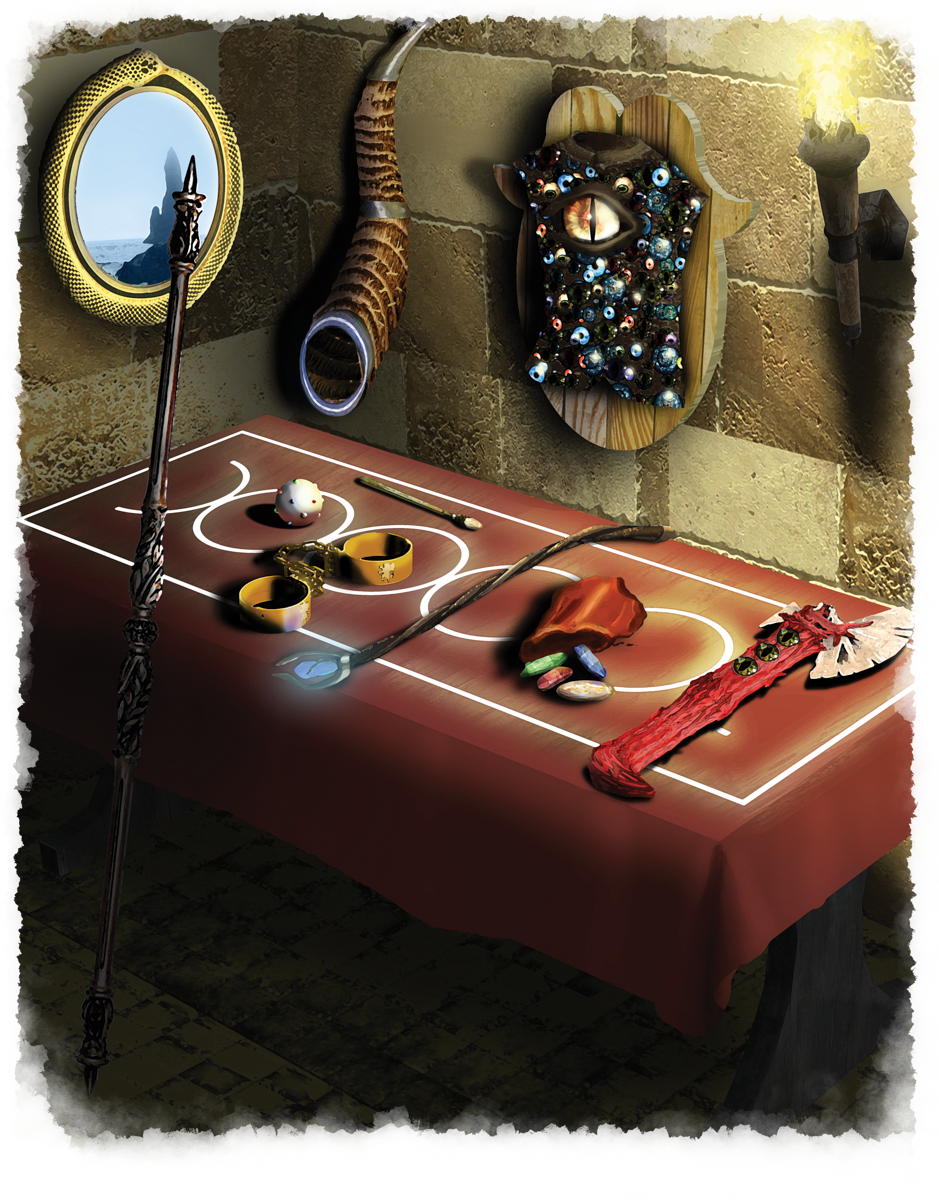 Small villages and towns don’t have all the amenities found in Sharn or Fairhaven. But the wide magic of Eberron extends to the Western Frontier. Magewrights still perform critical tasks using cantrips and rituals. There’s a launderer using Prestidigitation to get the dirt out of clothing, and a smith casting Magecraft (from Exploring Eberron) to guide their hammer. In a small Brelish village, you may have a limited number of Everbright Lanterns, but every house has at least one. Magical tools and techniques exist and are treasured; resources are simply more limited than in the big cities.
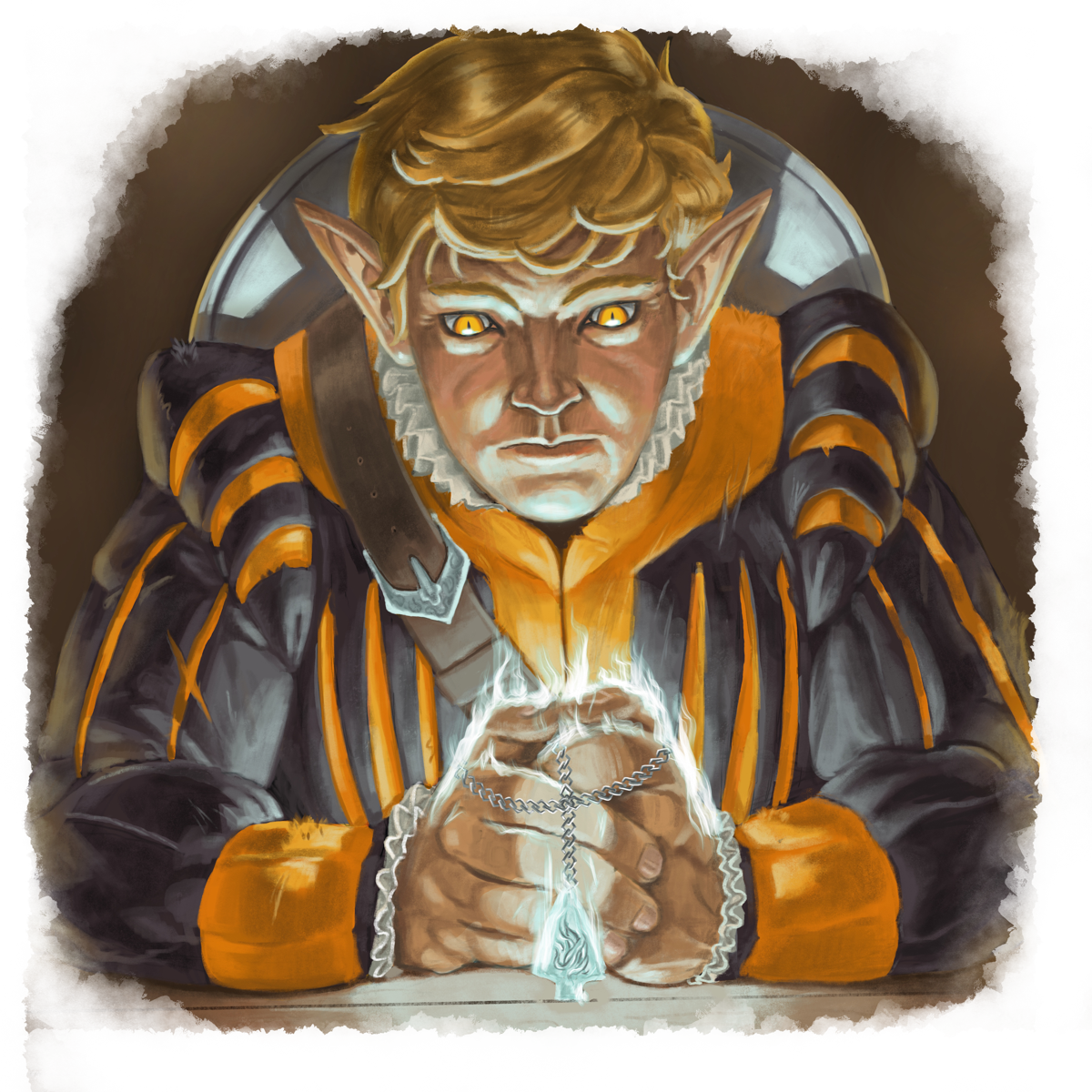 All of the above is true of Brelish villages. Droaamite communities are a different story. A Droaamite village might not have any Everbright Lanterns… because all the denizens have Darkvision and don’t have any need for them. They might not have a Jorasco healer, but the harpy songbird can heal the infirm with her invigorating song (effectively, using bardic magic to cast Cure Wounds or Lesser Restoration). A worg oracle may commune with the Shadow, but his Auguries are as accurate as any Brelish magewright. Consider the ways in which you could take advantage of an ogre’s great strength. Meanwhile, magewrights from the Venomous Demesne are spreading out across the Western Frontier, and training capable Droaamites. As time passes, Droaam will increasingly have wide monster and wide magic…
The Planes Made Manifest. Manifest zones are places where the energy and characteristics of one of the outer planes bleeds into the material plane. Manifest zones are found across Khorvaire, and adding a manifest zone to a scene is a way to highlight the magical nature of Eberron. The Manifest Zones table can be used as a source of inspiration or as a way to generate an entirely random manifest zone. Consider the impact that a manifest zone will have on the surrounding creatures or communities. If a village is built in a manifest zone, the inhabitants will likely find ways to make use of its benevolent powers. In general, manifest zones can be interesting ways to add color to a trip across the Barrens. A Lamannian manifest zone might be a small oasis in the harsh landscape, while a Shavaran zone could unleash blade storms (using Cloud of Daggers) at unexpected times. Possible effects of manifest zones can be found in Eberron: Rising from the Last War and Exploring Eberron.
| d12 | Linked Plane | Quirk |
|---|---|---|
| 1 | Daanvi | Exceptionally Small. The zone is a ten foot radius, or smaller. |
| 2 | Dolurrh | Airborne. The center of the zone is in the air. |
| 3 | Fernia | Faint. The effects of the zone only manifest when the plane is coterminous. |
| 4 | Irian | Gateway. Under specific circumstances, the zone can serve as a portal to the plane. |
| 5 | Kythri | Unstable. The zone fades in and out in unpredictable patterns. |
| 6 | Lamannia | Intense. The plane is always considered to be coterminous in this manifest zone. |
| 7 | Mabar | Huge. The zone covers a vast area—a ten mile radius or more. |
| 8 | Risia | Inhabited. The zone hosts a population of lesser immortals from the plane. |
| 9 | Shavarath | Void. The plane is always considered to be remote within this manifest zone. |
| 10 | Syrania | Beachhead. The zone contains a piece of the plane, such as a Thelanian feyspire. |
| 11 | Thelanis | Legendary. The zone has played an important role in history or folklore. |
| 12 | Xoriat | Roll Twice. Reroll contradictory results, such as Exceptionally Small and Huge. |